MEM: Master of Engineering Management, a professional master’s degree.
This post records my preparation for the 2024 SJTU MEM, including the early research, the pre-admission interview, written-exam study materials, study planning, and so on. Everything related to the MEM will be collected here.
- Choosing a school: SJTU or Fudan
- Key timeline for the 2024 MEM
- Pre-admission interview
- Written-exam study materials
- Written-exam study plan
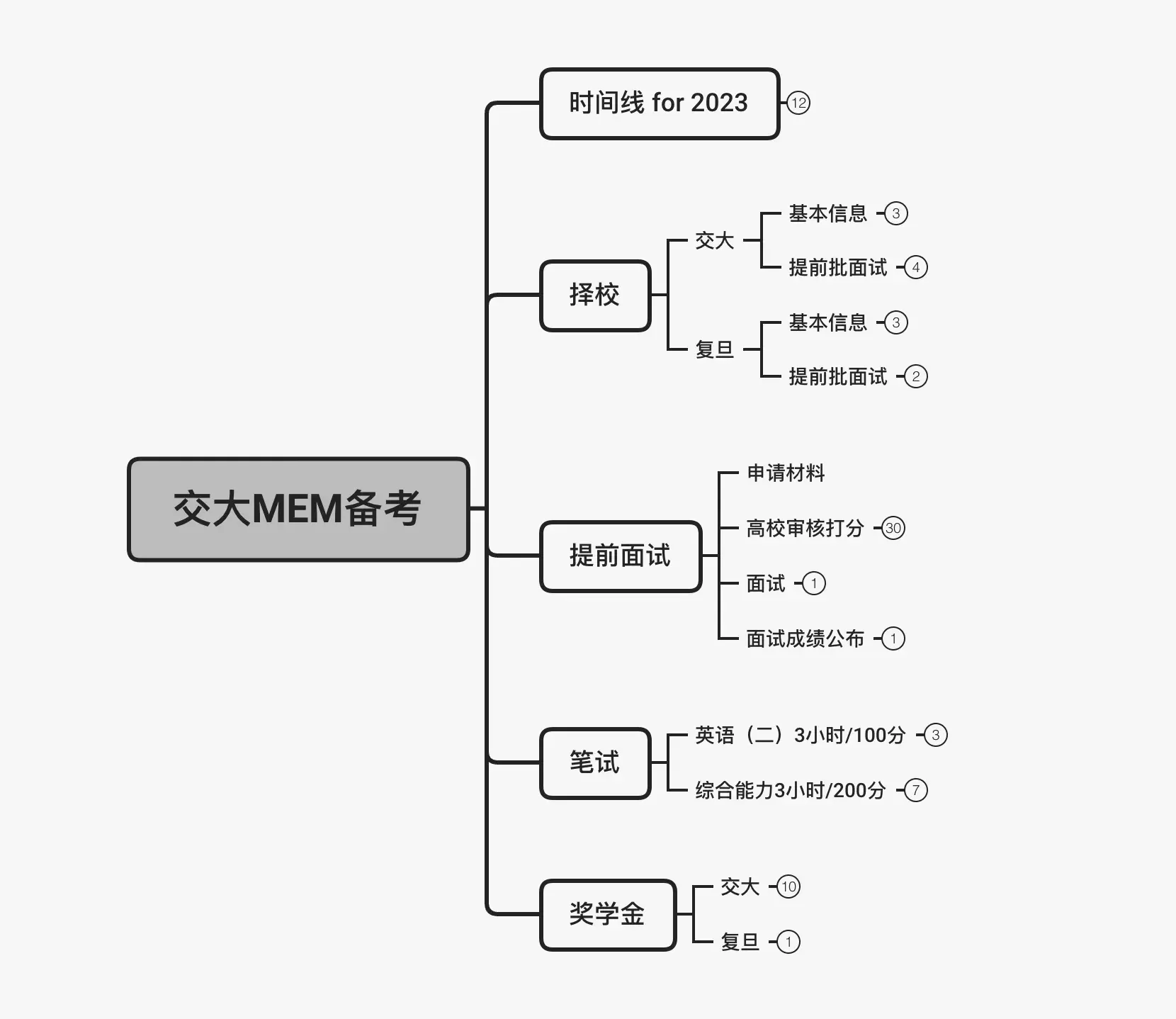
If you need the detailed mind map, add me on WeChat at imesong2012 with the note SJTU MEM prep, so we can study together and both make the cut.
Choosing a Target School
For school selection, I locked onto SJTU and Fudan early on and didn’t research other graduate programs. At first I was torn between an MBA and an MEM. Personally, I didn’t feel there was much difference between SJTU and Fudan. After attending several admissions briefings for MBA, EMBA, and MEM programs at both SJTU and Fudan, and talking with a few friends studying EMBA, MBA, or MEM at SJTU, I decided to apply for the SJTU MEM. Below is a comparison of some basic information about the SJTU and Fudan MEM programs, for reference only. Some of Fudan’s data comes from 2022 historical statistics, as I couldn’t find its latest 2023 policy.
| Basic info | SJTU | Fudan |
|---|---|---|
| Tuition | ¥238,000 | ¥198,000 |
| Duration | 2.5 years | 2 years |
| Enrollment | 400 students | 80 students |
| Track | Project Management | Project Management |
| School | School of Electronic Information and Electrical Engineering | School of Information Science and Technology |
| Scholarships | Top scorer ¥80,000, 2nd ¥50,000, 3rd ¥30,000, Excellent top 1% (~4 students) ¥20,000, Outstanding top 4% (~16 students) ¥10,000 | No info yet |
| Pre-admission interview | Yes | Yes |
Fudan School of Information Science and Technology MEM Admissions Overview
2024 MEM Timeline
If you’re preparing for the MEM exam for 2024 admission at SJTU — including the pre-admission interview, the written exam, and the second-round interview — here are the key dates, using SJTU as the example. Other schools differ slightly.
| Date | Key item | Note |
|---|---|---|
| Mar 2023 – Oct 2023 | Pre-admission interview | See the pre-admission interview table for each batch’s dates |
| Oct 5, 2023 – Oct 25, 2023 | Online registration | |
| Dec 23, 2023 | Written exam (national) | |
| Mar 2024 | Written exam results | |
| Apr 2024 | Second-round interview | |
| Sep 2024 | Enrollment | |
| Mar 2027 | Graduation |
Pre-admission Interview
SJTU’s pre-admission interview has 4 batches. The schedule for each batch is as follows:
| Batch | Application deadline | Interview date |
|---|---|---|
| Batch 1 | Mar 20 | Early to mid April |
| Batch 2 | May 1 – Jun 5 | Mid June |
| Batch 3 | Aug 1 – Sep 5 | Mid to late September |
| Batch 4 | Sep 10 – Oct 5 | Mid to late April |
The interview assessment has two parts: a score for the applicant’s résumé/materials and a score for interview performance. The two are combined into the total pre-admission interview score.
Applicant Materials Scoring
Applicants are evaluated across different dimensions to decide whether they’re a good fit for the school’s MEM admission, which affects their total admission score. The evaluation dimensions are relatively objective, though there is some room for maneuver.
Educational Background
Work Experience
Employer Size and Standing
- Fortune Global 500
- Industry-leading companies
- Leading companies in certain niche industries
Personal Background
- Years of work experience
- Management experience
- Number of direct reports
- Position level
- Annual salary
Professional Certifications
-
Certificates earned during university
- CET4 / CET6
- IELTS / TOEFL
-
Certificates earned during work
- CFA / CPA / PMP
Honors and Awards
- During university
- From work
- From social organizations
Recommendation Letters
Two recommendation letters that show how others evaluate you. Prefer friends or colleagues who know you well, ideally with some social standing or holding a management position at their company; SJTU alumni are preferred.
Career Plan
To see whether the applicant’s career goals are clear and whether the motivation for applying is reasonable.
Short Essay
Through a short essay, the school learns about the applicant’s understanding of their industry, observes their leadership, and sees their plans for future study.
Others
Personal strengths, hobbies, and interests.
Main Interview Content
The interview centers on the materials submitted by the applicant and assesses their professional background knowledge, work achievements, English proficiency, research plan and career plan, and overall qualities.
The interview uses a many-vs-1 format: three interviewers assess one applicant at the same time. Each applicant’s interview lasts 20–30 minutes, mostly in Chinese, with a 3–5 minute self-introduction in English.
Interview Results
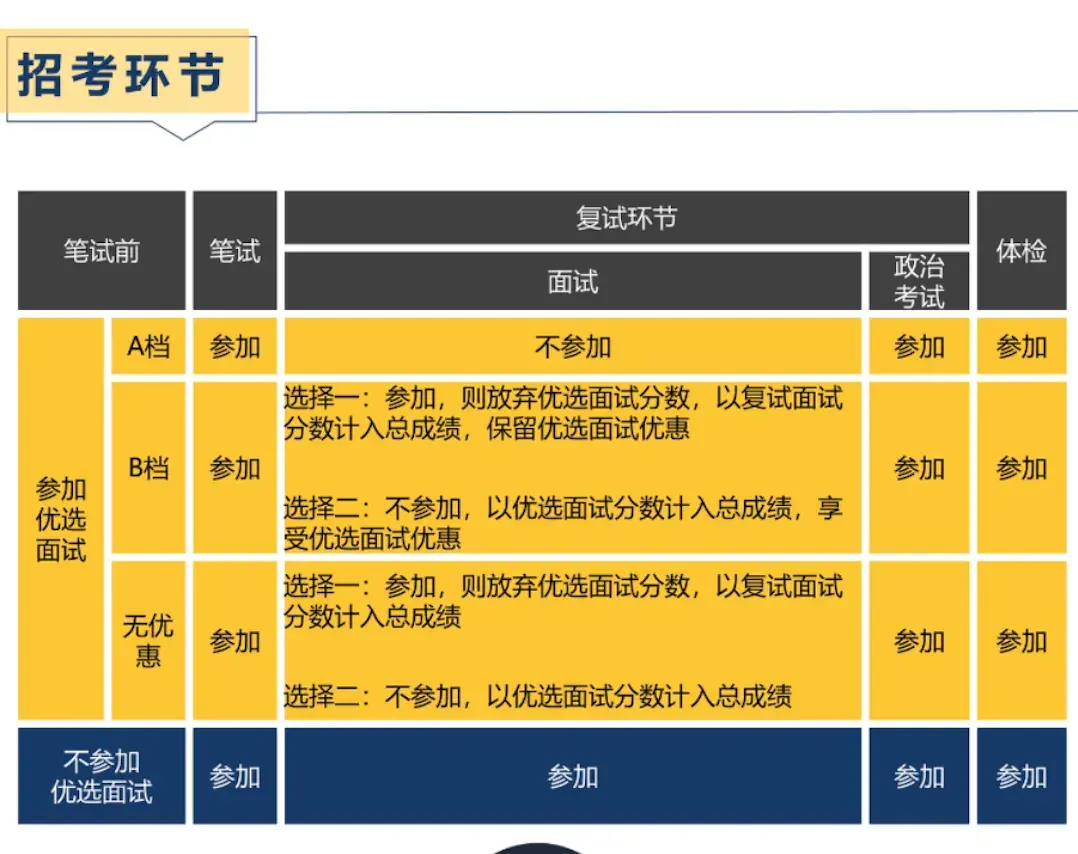
Under normal circumstances, results are announced 7 working days after the interview. SJTU’s interview results fall into three tiers:
- Tier A: if the written exam score reaches SJTU’s qualifying line, and the politics exam and physical exam are passed, the applicant gets a conditional offer. The goal of joining the pre-admission interview is to get this conditional offer, so you don’t have to attend the second-round interview.
- Tier B: if the written exam score reaches SJTU’s qualifying line, and the politics exam and physical exam are passed, applicants are ranked by total score (written exam score + pre-admission interview score, or second-round interview score), and get priority for a conditional offer under equal conditions (a pre-admission interview score or second-round interview score below 120 means rejection).
- Regular tier: if the written exam score reaches SJTU’s qualifying line, and the politics exam and physical exam are passed, applicants are ranked by total score (written exam score + pre-admission interview score, or second-round interview score) and admitted from highest to lowest (a pre-admission interview score or second-round interview score below 120 means rejection).
Written Exam
The written exam consists of two tests: the Management Comprehensive Ability test and English, each 3 hours long. Management Comprehensive is 200 points and English is 100 points, for a written-exam total of 300 points.
Management Comprehensive
The 200 points of Management Comprehensive are split into 3 parts: math 75 points, logic 60 points, and writing 65 points.
- Math: 25 multiple-choice questions
- Logic: 20 multiple-choice questions
- Writing: a short essay and a long essay
English
English is 100 points across 4 parts: cloze 10 points, reading comprehension 50 points, translation 15 points, and writing 25 points.
Written-Exam Study Materials
Textbooks
Based on experience shared by other candidates, the commonly used textbooks are the general MBA/MEM/MPA series from China Machine Press, known as the “red books”.
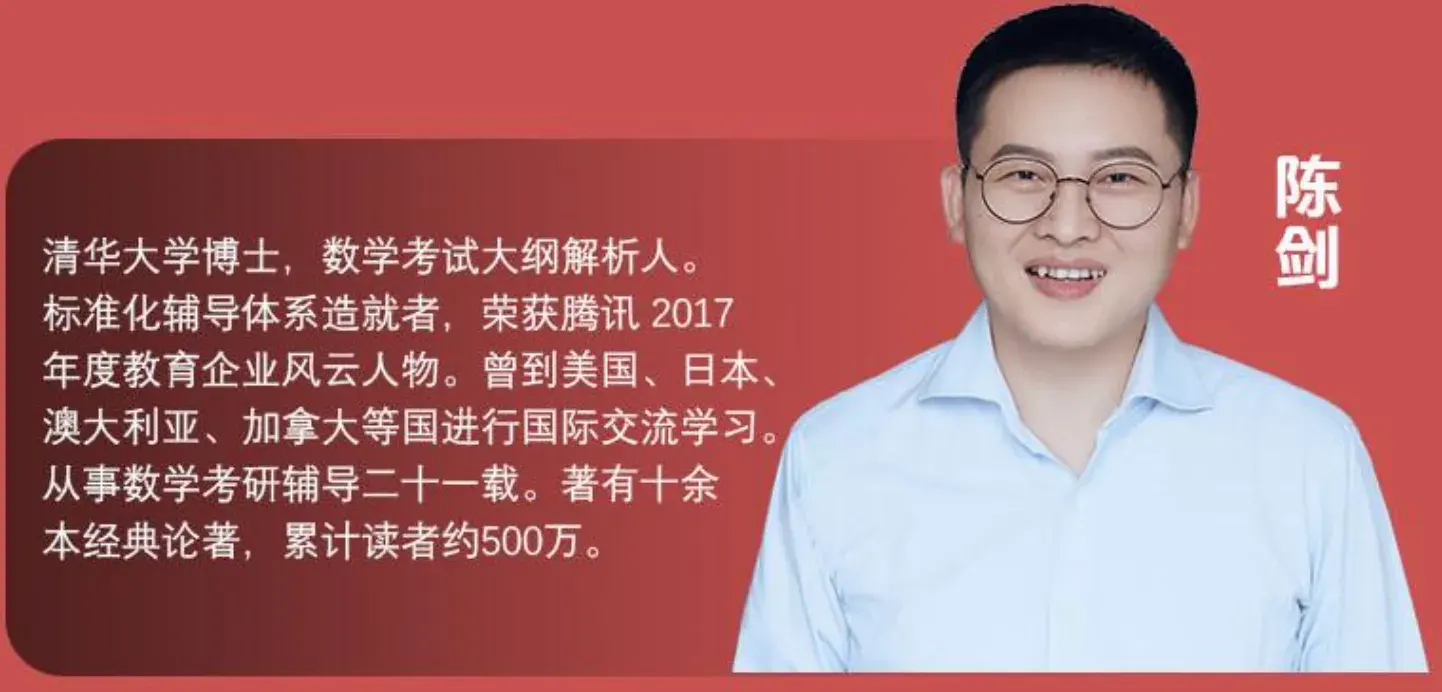
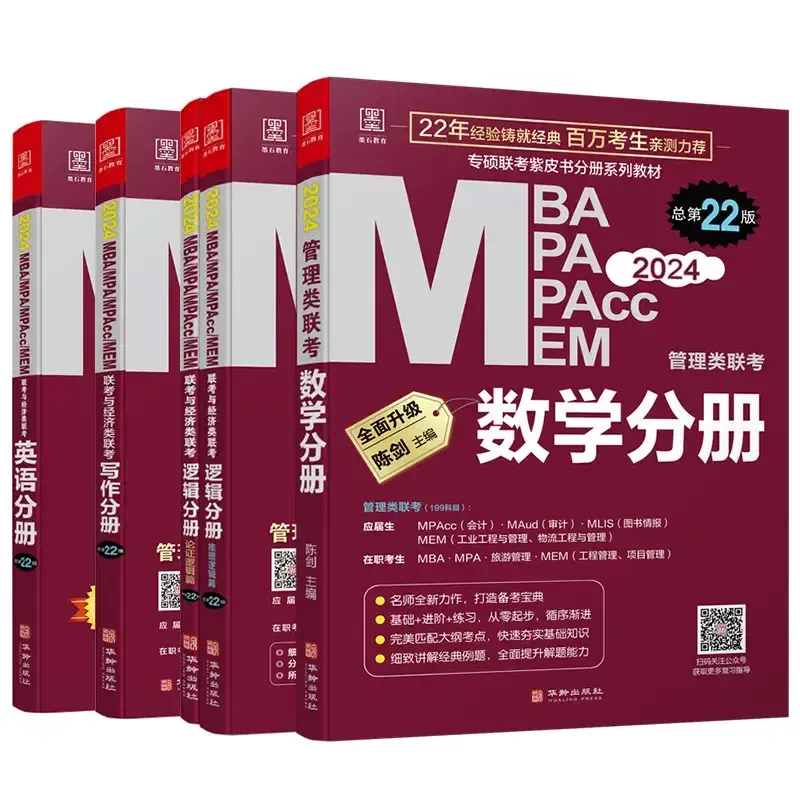 Math — 陈剑
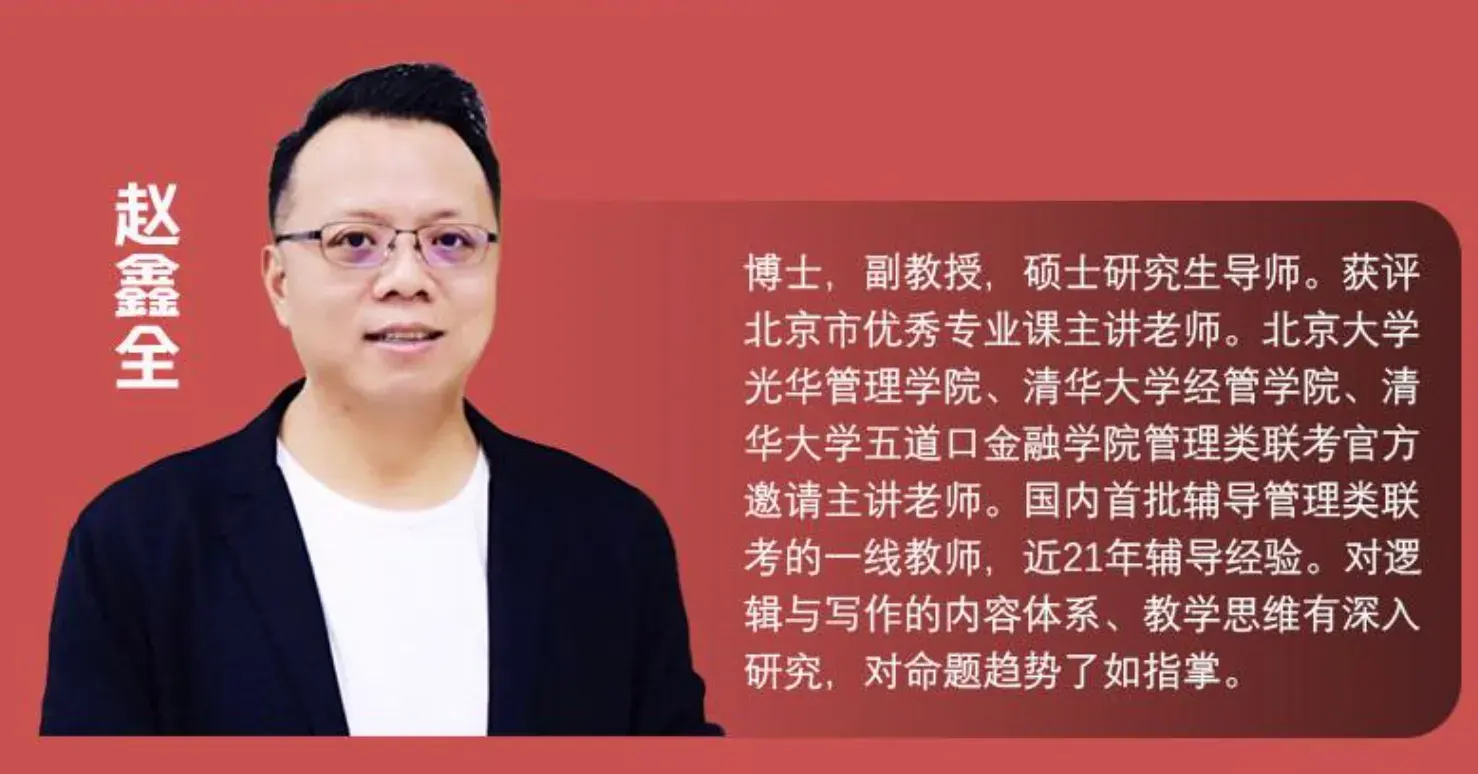
Writing — 赵鑫全
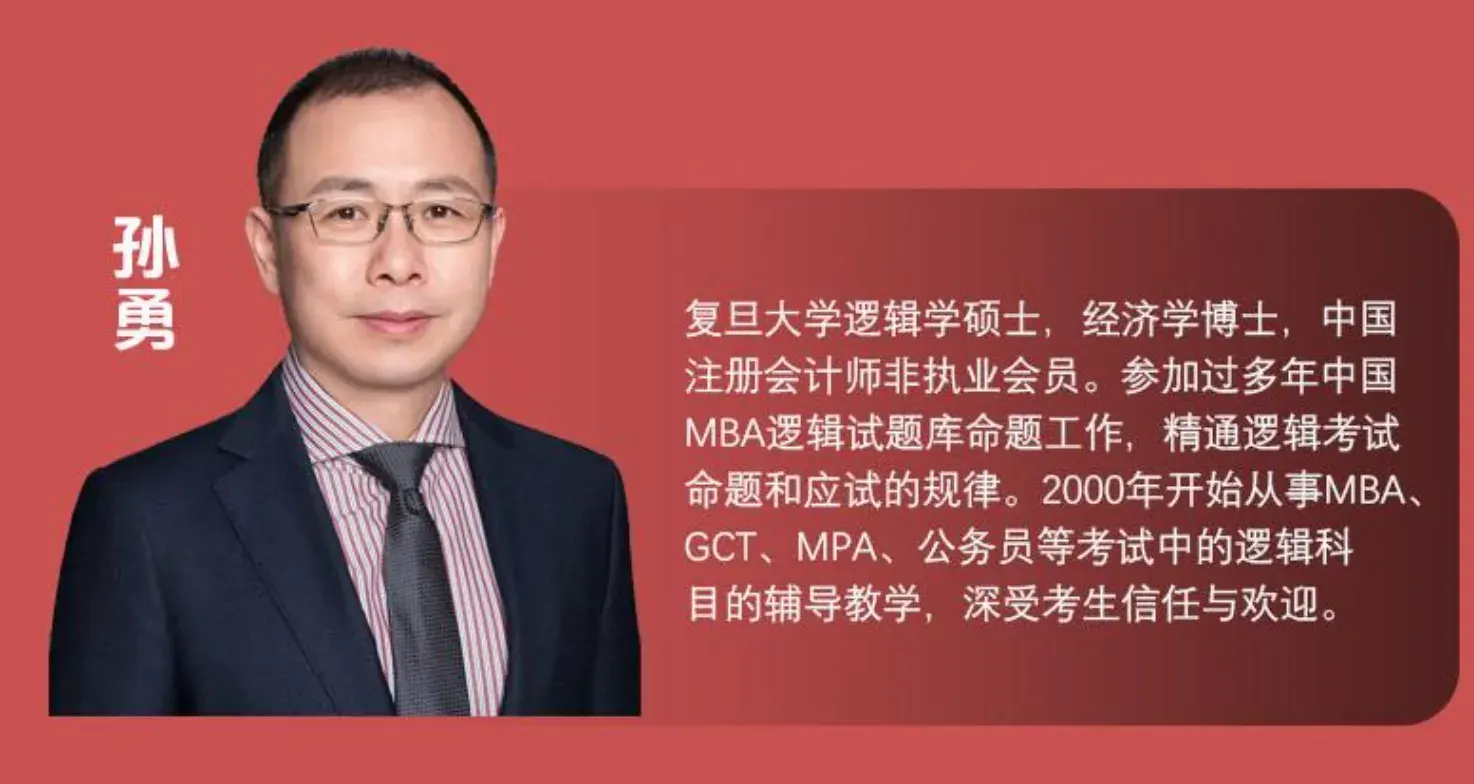
Logic — 孙勇
English — New Oriental
Math — 陈剑
Writing — 赵鑫全
Logic — 孙勇
English — New Oriental
Written-Exam Study Plan
I’m used to the OKR method at work. MEM prep has a clear goal and explicit assessment criteria, so I’m trying a bi-monthly OKR approach to help reach the final goal. Time commitment: at least 15–20 hours of study time per week.
- Monday to Friday: 1 hour × 5 = 5 hours
- Saturday: 5–10 hours
- Sunday: 5 hours
- Total: 15–20 hours
From May 1 to December 22, the total study time available is about 60 hours… converting to natural days (8 hours per day), that’s about 62.5–82.5 days, between 2 and 2.5 months. Doing the math carefully, there isn’t that much time.
Bi-monthly Prep OKR
Around the four areas of math, logic, writing, and English, evaluate the completion of the study plan on a bi-monthly basis.
Detailed Study Plan
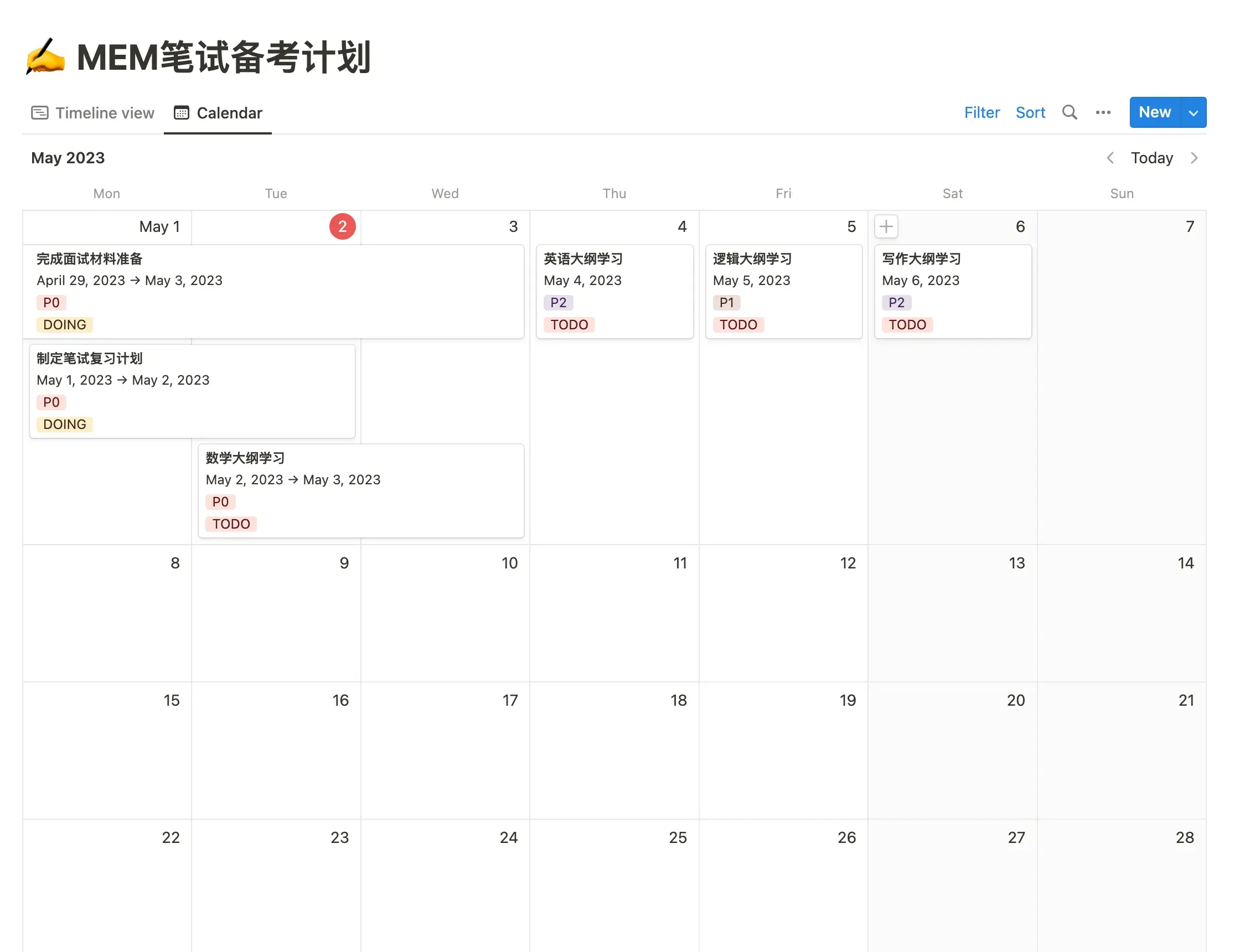
The detailed study plan is still being made and will keep improving as I study. The overall approach is math and logic first, then English and writing.
Follow the WeChat public account 技术后花园 (Tech Backyard) for more information.