The pace of AI development in recent days makes it feel like you have nowhere to go if you don’t know AI. Social media is flooded with tutorials teaching people how to do AI. This very article was written with AI assistance — its AI content is over 50%. The views and line of thinking here are my recent reflections on the development of AI.
1. Is It Still Too Late to Learn AI?
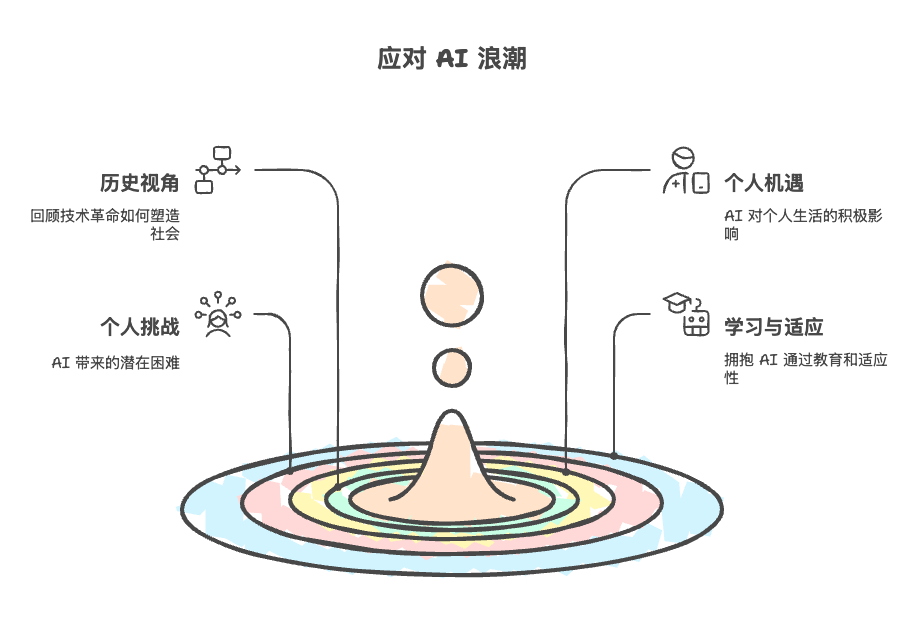
Is it too late to learn AI now? This question has been asked frequently lately. AI technology did not appear out of nowhere. In fact, from AlphaGo defeating the world Go champion to ChatGPT’s phenomenal global performance, AI had already made its mark. What has truly drawn widespread attention and reflection is that, as demonstrated by DeepSeek R1 and OpenAI Deep Research, AI technology is evolving at an astonishing speed, its applications keep expanding, and its influence is steadily deepening.
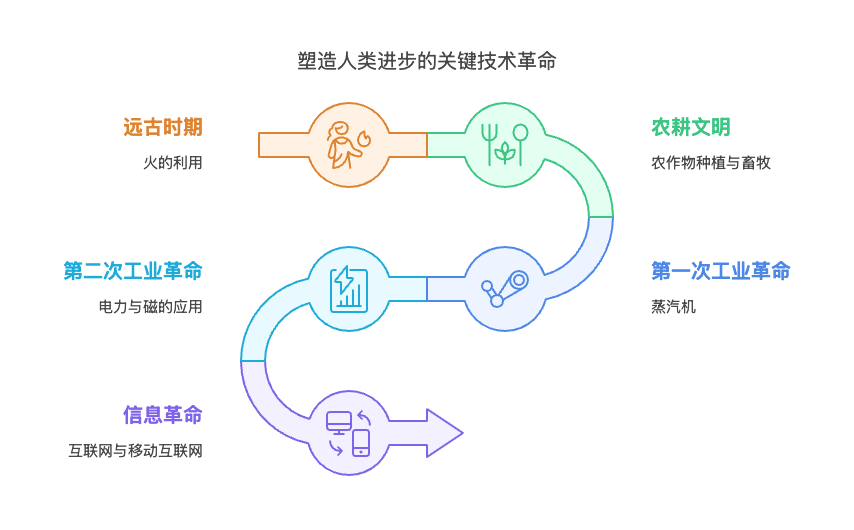
Faced with the continued development of AI, it is natural for people to wonder: is it too late to get involved? Can learning AI still lead to the future? Similar questions have recurred throughout human history. The progress of civilization is inherently tied to technological evolution. From humanity’s mastery of fire in ancient times, to the Agricultural Revolution laying the foundation for settled life, to the social transformation brought by the Industrial Revolution, every technological breakthrough has profoundly reshaped human lives and trajectories.
At this new historical juncture, examining the wave of AI with a calm and rational perspective helps us grasp the essence of technological change and think about how to respond. The answer to “Is it too late to learn AI now?” may depend not only on AI itself, but also on how we understand and accept technological evolution, and how we actively adapt to and leverage the new opportunities it brings.
2. A Leap in Productivity: AI Is Not Unprecedented — Humanity Has Been Through Multiple Transformations
It is undeniable that the rise of AI marks a major leap in productivity. From automating repetitive tasks to accelerating scientific discovery, AI’s potential to reshape industries and augment human capabilities is enormous. However, it is crucial to recognize that this surge in productivity, transformative as it is, is not unprecedented in human history. Throughout our development, humanity has repeatedly encountered technologies that fundamentally changed our productive capacity and social structures.
Consider, for example, humanity’s mastery of fire. This primitive technology provided warmth, protection, and the ability to cook food, greatly improving survival rates and freeing up time and energy for other pursuits. The shift to agricultural society marked another tremendous leap. The development of farming and animal husbandry enabled settled life, reliable food surpluses, and the division of labor, laying the groundwork for the formation of complex civilizations.
The Industrial Revolution, driven by the steam engine, unleashed yet another wave of productivity growth. Mechanization transformed manufacturing, transportation, and agriculture, bringing unprecedented economic expansion and urbanization. Later, the harnessing of electricity and magnetism sparked the Second Industrial Revolution, giving rise to new industries such as mass production and telecommunications, and further improving efficiency across all sectors.
More recently, the information revolution, driven by the internet and mobile internet, connected the globe and democratized access to information and communication. This revolution fueled globalization, transformed business models, and created entirely new forms of economic activity and social interaction.
Every historic technological change brought significant productivity gains, reshaped human society, and presented both opportunities and challenges. Therefore, to understand the true impact and significance of the current AI revolution, it is necessary to examine these past transformations and draw insights from humanity’s experience in navigating technological change.
3. Standing in the Present: The AI Wave and the Individual — Opportunities and Challenges Coexist
Turning our attention to the present, we must consider what the AI wave means for each of us. While historical context offers valuable perspective, it is the immediate and personal impact of this technological change that truly deserves our attention. The AI revolution, like those before it, presents individuals in today’s world with a complex picture containing both unprecedented opportunities and serious challenges.
On the opportunity side, AI offers the potential to significantly improve efficiency in many aspects of our lives. AI-powered tools can automate repetitive and tedious tasks, freeing human time and energy for more creative, strategic, and fulfilling pursuits. From intelligent assistants managing schedules to AI algorithms optimizing workflows, the potential to boost productivity and simplify daily life is enormous. Moreover, AI is expected to create entirely new industries and job categories that we can barely imagine today. These emerging fields will require new skills and expertise, opening new avenues for career development and economic opportunity. Furthermore, AI has the potential to improve our quality of life in profound ways, from advances in medical diagnosis and personalized medicine to AI-driven education, accessibility, and sustainable living solutions.
However, beyond these exciting possibilities, we must also acknowledge the challenges the AI wave brings to individuals. One significant challenge is the rapid obsolescence of skills. As AI takes over routine tasks, traditional skills may quickly become less valuable, requiring individuals to keep learning and adapting to stay relevant in the labor market. The AI revolution may also disrupt existing employment structures, leading to job losses in certain industries. Navigating this changing job market calls for proactive adaptability, retraining programs, and possibly new social safety nets. Beyond the economic impact, AI raises profound ethical and social questions for individuals. Issues surrounding data privacy, algorithmic bias, job displacement, and the potential misuse of AI technology all require careful consideration and proactive solutions to ensure that the future of AI benefits all of humanity.
In navigating this complex landscape, it is essential for individuals to adopt a proactive and adaptive mindset, embrace lifelong learning, and critically evaluate both the promises and the risks of the AI revolution.
4. Learning from History, Facing the Future: Drawing Wisdom from Past Transformations
Having examined the historical context and the present-day impact of the AI revolution, it is crucial to ask: what wisdom can we draw from humanity’s past experience with technological transformation? Throughout history, every major technological change has presented humanity with a unique set of challenges and opportunities. By examining these past events, we can identify recurring patterns and enduring lessons that can guide us in navigating the AI wave and shaping a beneficial future.
One of history’s most consistent lessons is the importance of embracing change and actively engaging in lifelong learning. Technological revolutions inevitably disrupt existing industries, skills, and ways of life. Those who resist change or cling to outdated skills often face unemployment and hardship. In contrast, individuals and societies that actively embrace new technologies, adapt their skills, and cultivate a mindset of continuous learning are best positioned to adapt to change and thrive. In the case of AI, this lesson underscores the need for individuals to develop a growth mindset, actively seek opportunities to learn AI and related technologies, and be prepared to adjust their skills and careers as the field evolves.
Another important historical insight is the need to understand the deeper nature of technological change and to align oneself with emerging trends. While the specific technologies of different revolutions may vary — whether fire, agriculture, steam power, electricity, or AI — the fundamental drivers of progress often have much in common. These include the pursuit of efficiency, the expansion of human capability, and the desire to solve pressing problems. By understanding these underlying drivers and recognizing the broader trends shaping the AI revolution, individuals can make more informed decisions about their education, careers, and interactions with AI technology. Rather than fearing the unknown, a deeper understanding of technological progress can empower individuals to proactively position themselves to benefit from the AI wave.
Finally, history teaches us the importance of remaining optimistic and confident in humanity’s ability to navigate technological change. While technological revolutions inevitably bring challenges and uncertainty, they have also consistently led to long-term improvements in human well-being, productivity, and social progress. Humanity possesses a remarkable capacity to adapt, innovate, and solve problems. By leveraging these strengths and fostering a spirit of collaboration and responsible innovation, we can harness the transformative power of AI and create a future that is prosperous and beneficial for all. Fear and resistance to change are understandable human reactions, but history shows that embracing change with informed optimism and active engagement is the most constructive path forward.
5. Conclusion: It Is Not Too Late to Learn AI — A Personal Perspective
Returning to the original question — “Is it too late to learn AI now?” — a thoughtful answer, grounded in historical context and reality, is: no, it is not too late. For individuals seeking to navigate an ever-changing landscape, learning AI remains a relevant and worthwhile endeavor.
As we have discussed, the AI revolution, significant as it is, is only part of a larger pattern of technological evolution in human history. Like the transformations before it, it brings both opportunities and challenges. History shows that those who adapt, keep learning, and embrace change are better equipped to navigate periods of technological transition.
The AI wave has undoubtedly arrived, and its influence is likely to grow. While a sense of uncertainty is understandable, at the individual level the potential advantages of engaging with AI are worth considering. Learning AI is not just about mastering technical skills; it is about cultivating forward-looking thinking, developing digital literacy, and preparing to participate in a world increasingly shaped by AI.
Therefore, perhaps the most relevant conclusion is to shift the focus from asking “Is it too late?” to focusing on personal action: consider learning AI. Explore its relevance to your own interests and goals. Develop the foundational knowledge and skills that will empower you to engage with AI with greater understanding and agency. The future is not predetermined; it is shaped by the choices and actions of individuals. By considering learning AI and embracing lifelong adaptation, each of us can play a part in shaping a future in which technology serves human goals in ways that are meaningful and beneficial at the individual level. Right now, the opportunity to learn AI remains open to those who choose to pursue it.
Follow the WeChat public account 技术后花园 (Tech Backyard) for more information.