This is a translated article. The author is Ethan Evans, a retired Amazon VP. Original link: https://substack.com/@levelupwithethanevans/p-153506474 .
“Twenty years from now, only your children will remember you worked late”
This sentence is worth pondering.
Over my career, I have witnessed many closely-knit teams. We fought side by side, shared lunch every day, and attended social events together.
I also pulled late nights for every company I worked for; working weekends was the norm.
Readers who follow me surely know the feeling well. You give everything to keep a project on track, unwilling to let the team down.
But today, I want to share some hard data from retirement life — the other shore you have not yet reached, but will face one day.
The truth of life, four years after leaving Amazon
My contact list still holds many Amazon “friends,” but the essence of our relationship is:
-
Great people: smart, diligent, kind to others
-
One-way contact: whenever I reach out, I always get a warm response
-
Mutual silence: they almost never call me first
Among dozens of “close comrades-in-arms” (including direct reports, bosses, and colleagues I worked with closely), how many am I still in touch with?
Almost zero.
And this is only four years after leaving.
I don’t blame them at all. These are wonderful people — if we met again, we’d still have a great time talking.
The law of reality: 99% of workplace friendships fade after you leave
If you have twenty years of work experience, ask yourself:
-
How many former colleagues are you still in touch with? Excluding those whose relationships grew beyond work (hiking buddies, sports partners, neighbors, etc.), purely “colleague” connections are vanishingly rare.
-
Unless you reported directly to the CEO or an executive, has a former boss ever reached out to you after you left?
In my own record, the answer to the second question has always been zero.
A corporate entity never proactively contacts a departed employee. Never.
A sober understanding: the company–employee relationship is contractual at its core
When you are old and lying sick in bed, the one keeping vigil at your bedside will never be your former employer.
The overtime culture in America makes this especially stark.
Most of my articles teach you how to thrive in the workplace. But the deeper reason behind it all is this: people need money to make a living, and career achievement brings satisfaction.
This article aims to offer a balanced perspective: stay friendly, enjoy the camaraderie of colleagues, pursue promotions, build wealth.
But never forget the ultimate meaning of work.

Break the illusion that “a company repays loyalty.”
A reminder: a company is merely a legal construct. Even if you were an outstanding Amazon employee, after you retire the company will not send you a fruit basket, nor flowers at your funeral.
That is simply the essential logic of a corporation.
What truly deserves your investment is life outside the company. Don’t sacrifice irreversible, precious things for work — your children remember your absence.
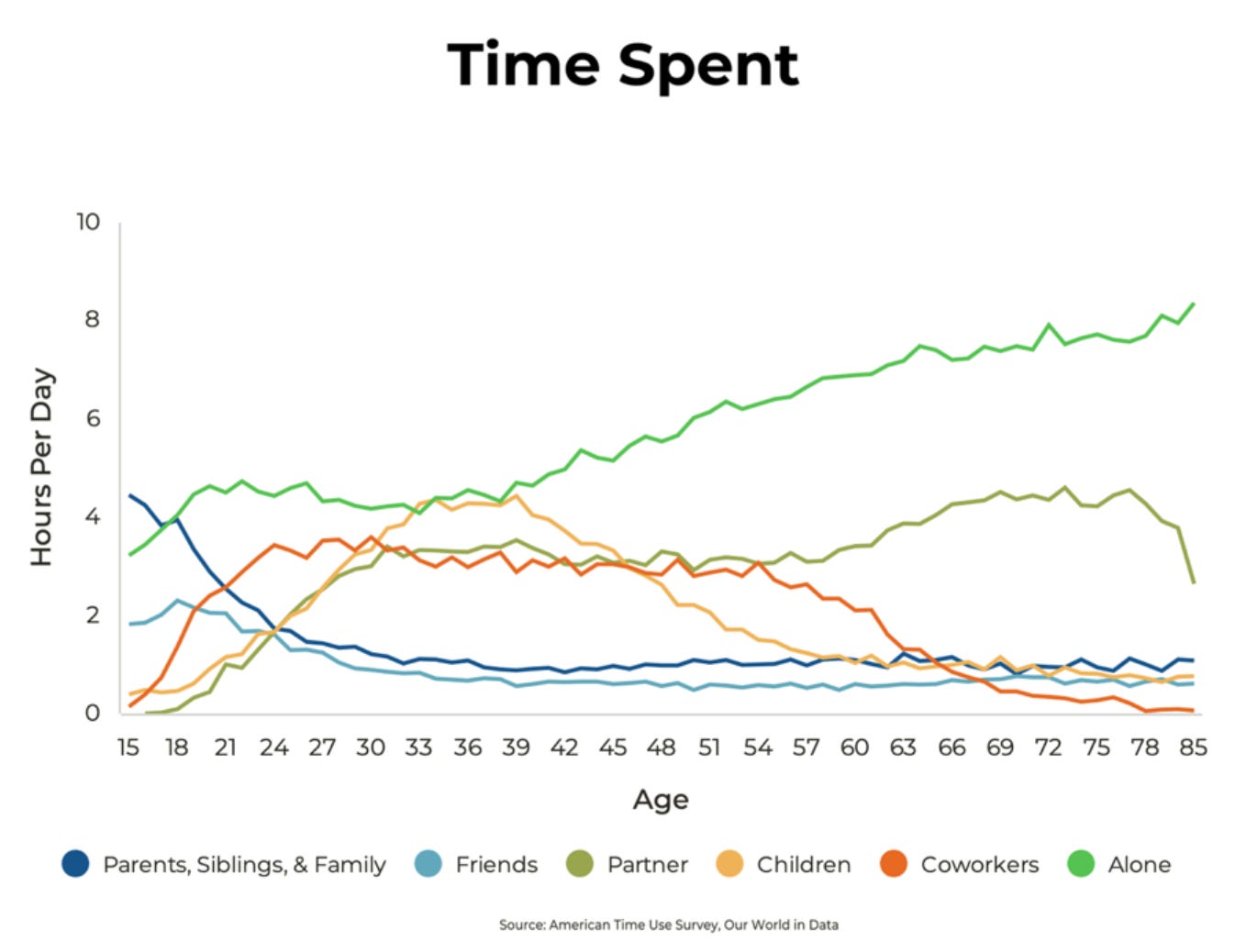
Look at the chart of time spent, with three takeaways:
-
Time with family drops off a cliff after age 20 — cherish it;
-
Time with your children peaks around age 30 and then plummets. Ages 0–10 are the “magic window of childhood,” when parents are a child’s whole world;
-
Time with colleagues drops to zero the moment you retire — colleagues are wonderful, but they rarely stay with you for the long haul.
“How many times did you fail this week?” — a golden topic for parent–child conversations
Spanx founder Sara Blakely revealed that her father asked about her failures every week — and celebrated them.
If she had no “failures” that week, her father was actually disappointed.
This completely redefines success.
The greatest failure is shrinking back in fear, not the outcome.
Sara puts it brilliantly:
“Too many people are afraid to take risks for fear of failure
afraid to start a business, afraid to create, afraid to chase their dreams
only by redefining failure can life open up boundlessly”
You may be grateful that your parents worked hard to raise you… but wouldn’t you have wanted more time together?
The data shows: ages 0–18 account for 93% of all the parent–child time you’ll ever have. You can’t accompany them forever, but be fully present when they need you, and make the most of it.
Follow the WeChat public account Tech Backyard for more.